Quick Facts
- Global Safety Rate: Commercial aviation achieved a 2023 accident rate of 0.80 per million sectors, the lowest in a decade.
- Flight Statistics: Statistically, there is only one accident for every 1.26 million flights globally.
- The Lukla Challenge: Tenzing-Hillary Airport features a 527-meter runway with a 12% uphill gradient, requiring 100+ specialized missions for pilot certification.
- Engineering Standards: Modern jetliners contain triple-redundant hydraulic and electrical systems to ensure operation even during multiple failures.
- Training Rigidity: Commercial pilots undergo intensive simulator-based checks every six months to practice for extreme, low-probability scenarios.
- Safety Technology: Advanced systems like weather radar and ground proximity warnings provide constant data to prevent human error.
To manage the fear of flying, it is helpful to understand the rigorous training and technological redundancies that ensure aviation safety. Pilots undergo continuous simulator checks and proficiency reviews to handle extreme conditions, ensuring that human professional judgment and advanced automated systems work together to navigate even the most challenging environments safely.
Traveling with my two kids has taught me that half the battle of vacationing is simply getting there with your peace of mind intact. Whether you are a parent triple-checking car seat safety or a solo traveler gripping the armrests during takeoff, the anxiety surrounding air travel is incredibly common. We often hear that flying is the safest way to travel, but when you are at 35,000 feet and the plane starts to jiggle, those commercial aviation safety facts can feel a bit distant. To help us bridge the gap between fear and facts, I spoke with pilots who operate in some of the most demanding environments on Earth to explain why you can truly trust the wings you are on.
The View from the World’s Toughest Cockpit
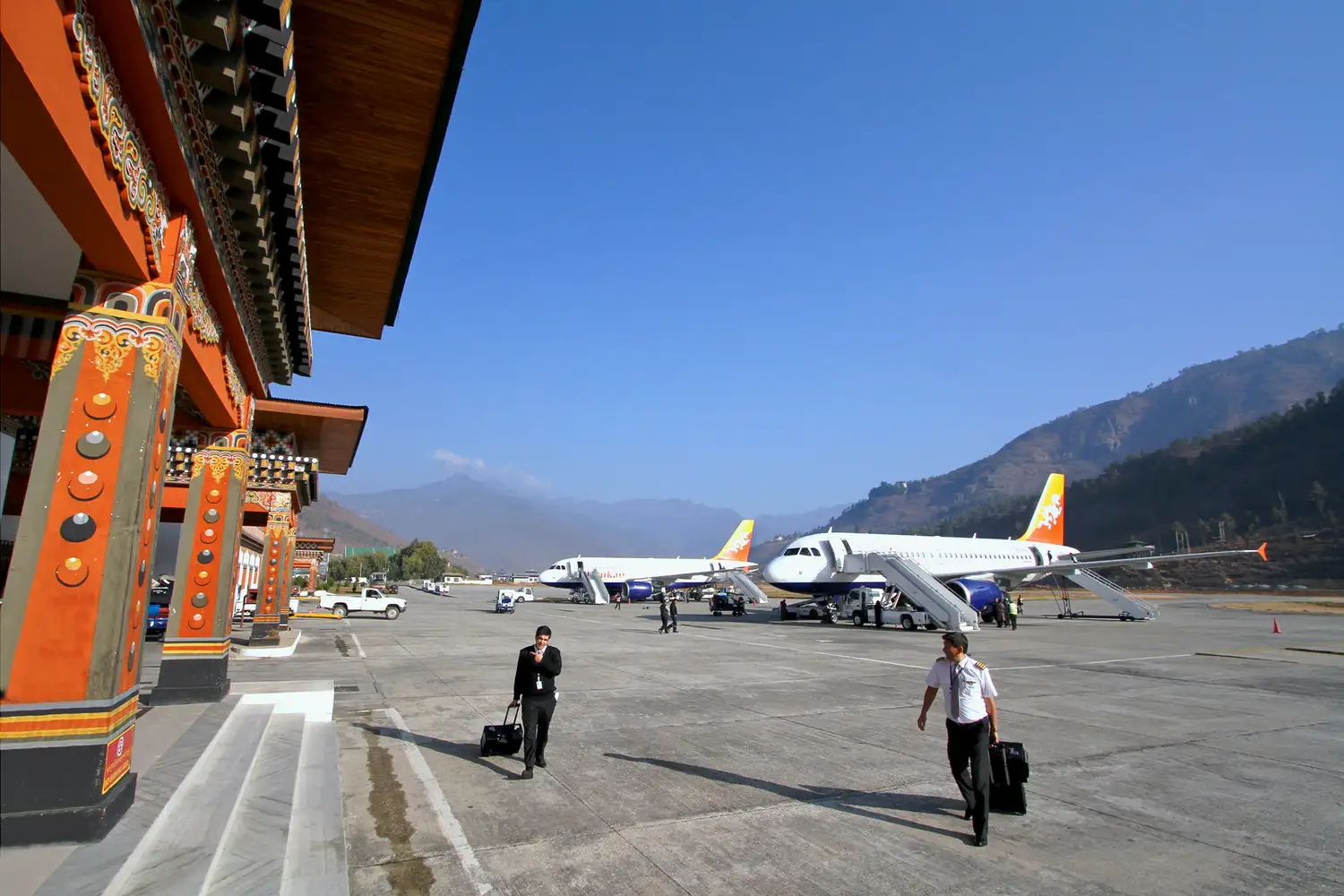
When we think about flying into difficult airports safely, we often imagine a high-stakes movie scene. But for the elite group of pilots flying into Paro International Airport in Bhutan, it is a matter of disciplined precision. Surrounded by the 18,000-foot peaks of the Himalayan terrain, only about 50 pilots globally are certified to make this approach. They must navigate a winding valley and touch down on a runway that is only visible moments before landing.
If a pilot can safely manage a manual visual landing approach in a tight mountain valley, a standard landing at a major hub like Heathrow or JFK is remarkably routine. This level of professional authority isn't just about talent; it is about specialized training. For instance, flying to or from Lukla Airport in Nepal involves navigating one of the shortest runways in the world. While there have been a total of 56 fatalities in accidents involving Lukla as of late 2023, the vast majority of these incidents occurred with small, non-commercial bush planes or in weather conditions that modern commercial airlines simply would not fly in.
The discipline required for these mountain routes is the same discipline your pilot uses on a family trip to Orlando. They operate with a "no go-around" mindset in the mountains, meaning every movement is calculated. In standard commercial aviation, pilots always have a Plan B, C, and D. Every decision in cockpit decision-making is made with a conservative bias—if there is a hint of doubt regarding weather or equipment, the professional choice is always to wait or divert.
Decoding Aviation Anxiety: Sensory and Psychological Facts
Many of the nervous flyers I talk to mention a specific fear of flying phobia name: aerophobia. Sometimes called aviophobia, this anxiety often stems from a lack of control and a misunderstanding of what the aircraft is doing. One of the best fear of flying pilot advice tips I have ever received is to learn the "language" of the airplane. Most of the things that scare us are actually signs that the plane is doing exactly what it was designed to do.
Think of it as a Sensory Decoder. When you hear a loud "thunk" after takeoff, that isn't something falling off; it is the landing gear tucking away to make the flight more fuel-efficient. When the engines suddenly sound quieter a few minutes into the flight, the pilot hasn't turned them off—they have simply reduced from "climb power" to "cruise power," much like you shift gears on a highway.
| Sound or Sensation | What it actually means | Safety Status |
|---|---|---|
| Single "Ding" or Chime | A passenger or crew member is calling for service or communication. | Normal |
| Sudden Engine Quietness | The aircraft has reached its initial cruise altitude and is leveling off. | Safe |
| Sustained Vibration | The plane is flying through slightly denser air or "dirty" air from a plane ahead. | Normal |
| "Thunk-Thunk" after landing | The wheels have touched down and the spoilers are deploying to slow you down. | Safe |
Understanding air turbulence mechanics is also vital. To a pilot, turbulence is a comfort issue, not a safety issue. An airplane in turbulence is like a car driving over a gravel road; the suspension (the wings) is designed to flex and absorb the bumps. Modern flight crew communication ensures that if the air ahead is bumpy, pilots share that data with air traffic control so other planes can find a smoother altitude.
The Safety Envelope: How Modern Jets Protect You
From a parent's perspective, I love things that are "idiot-proof." Modern aircraft safety features explained to me by engineers suggest that planes today are essentially built with invisible guardrails. These systems are part of what we call the protection envelope. Whether it is an Airbus or a Boeing, the flight deck automation is designed to prevent the plane from doing anything "extreme."
Commercial jets are built with redundant aircraft systems. This means that for every vital part, there are at least two backups.
- Electrical Redundancy: If the main engine generators fail, there is an Auxiliary Power Unit (APU) in the tail. If that fails, there is a deployable air turbine that uses the wind to generate power.
- Hydraulic Systems: Most jets have three independent hydraulic systems. A plane can be flown safely with only one.
- Navigation and Awareness: The Ground Proximity Warning System (GPWS) uses radar and GPS to constantly monitor the terrain below. If the plane gets too close to an obstacle, it provides loud, clear audio commands to the pilot.
These systems work together so that even if a human makes a mistake, the machine provides a safety buffer. When you combine this engineering with advanced weather radar monitoring, pilots can "see" storms hundreds of miles away and simply steer around them. This is why a flight diversion or a delay shouldn't be seen as a failure; it is actually a sign of a perfectly functioning safety system putting your life above the schedule.
The Human Layer: Recurrent Training and Data Trends
While the machines are impressive, the people are the real heroes. Every six months, every commercial pilot you fly with goes back to school. During recurrent pilot training, they spend days in high-fidelity simulators that perfectly mimic their aircraft. They don't practice regular landings; they spend hours practicing engine failures, fires, and electrical outages—scenarios that 99% of pilots will never face in their actual careers.
This culture of "What-if" drills creates a level of preparedness that is unmatched in any other industry. When you look at the 2023 global accident rate of 0.80 per million sectors, you are seeing the result of millions of hours of simulated practice.
For those struggling with aerophobia: fear of flying, it helps to realize that safety isn't a matter of luck. It is a professional discipline. Pilots use a mental framework often called "Bathroom Mirror Honesty." Before every flight, they must be certain they are physically and mentally fit to fly. If they aren't, they step down. This institutional safety culture is why we have seen such a massive downward trend in risk over the last few decades.
FAQ
How can I get over the fear of flying?
Overcoming anxiety often starts with education. Learning how to overcome fear of flying involves understanding that the wings are not held on by bolts that can "snap," but are part of a continuous structure designed to withstand forces far greater than any turbulence can provide. Many people find success by gradual exposure, such as visiting an airport to watch planes take off, or using apps that track flights in real-time to see just how many thousands of planes are in the air safely at any given moment.
What is aviophobia?
This is the clinical term for the fear of flying, often interchangeable with the fear of flying phobia name aerophobia. It can be triggered by various factors, including a fear of heights, a fear of being in enclosed spaces (claustrophobia), or a feeling of a lack of control. Recognizing that it is a recognized psychological condition can help travelers seek specific resources, such as cognitive-behavioral therapy or "fearless flyer" courses offered by many airlines.
What is the root cause of fear of flying?
The root causes often vary from person to person. For some, it is the result of a past turbulent flight that the brain has coded as a "near-death" experience, even if the plane was never in danger. For others, it is related to the "unknown"—the strange noises and movements of the aircraft that are not part of our daily lives on the ground. Understanding that chimes or power changes are signals of active monitoring and safety checks can help reframe these triggers.
What is the riskiest part of flying?
Statistically, the most dangerous part of any trip is the drive to the airport. Once you are on the aircraft, you are in a highly regulated environment where every variable is managed. While takeoff and landing require the most attention from the crew, the technological buffers like Ground Proximity Warning System and automated flight protections make these phases exceptionally safe.
How do I get over my fear of flying?
Practical steps include speaking with the flight attendants when you board; they are trained in aviation safety and can reassure you about any noises you hear. Focus on controlled breathing—inhaling for four counts and exhaling for six—to calm your nervous system. Finally, remind yourself that flight diversions or delays are evidence of a functioning safety system that prioritizes you over everything else.