There is a specific kind of silence that only exists in the Finnish wilderness—a quiet so profound you can almost hear the crystalline structure of the snow as it settles. For 2026, this serenity is paired with a surge of cultural ambition. Recently named one of Lonely Planet’s "Best in Travel 2026" destinations, Finland is moving beyond its reputation as the world's happiest country to become a global leader in sustainable urban design and high-concept cultural tourism.
The year 2026 marks a pivotal moment for the nation. Oulu, the "Capital of the North," will take center stage as the European Capital of Culture, while the historic city of Turku will unveil Fuuga, a landmark music hall that promises to redefine the Aura River waterfront. From the design-saturated streets of Helsinki to the indigenous Sámi lands of the high north, Finland offers a rare duality: the sophistication of a modern social democracy harmonized with a landscape that remains unapologetically wild.
1. Helsinki: The Design-Driven Gateway
Helsinki is a city that breathes. Unlike the frantic pace of other European capitals, the Finnish capital prioritizes "human-scale" living. For 2026, the city’s skyline continues to evolve while honoring its neoclassical roots. The central hub remains the Central Library Oodi, a masterpiece of glass and timber that functions more like a public living room than a book repository. Nearby, the Kiasma Museum of Contemporary Art offers a rotating gallery of Nordic visionaries, while the Helsinki Cathedral remains the city's iconic white-domed sentinel.
For those seeking refined luxury, 2026 sees the full reopening of Hotel Kämp. This historic institution is completing a major refurbishment in August 2026, adding 22 new suites that blend 19th-century opulence with state-of-the-art Finnish wellness technology.
Expert Insight: "In Helsinki, luxury isn't about gold leaf; it's about space, light, and the quality of the air you breathe," says local architect Mikko Halonen. "We design our buildings to be an extension of the forest."
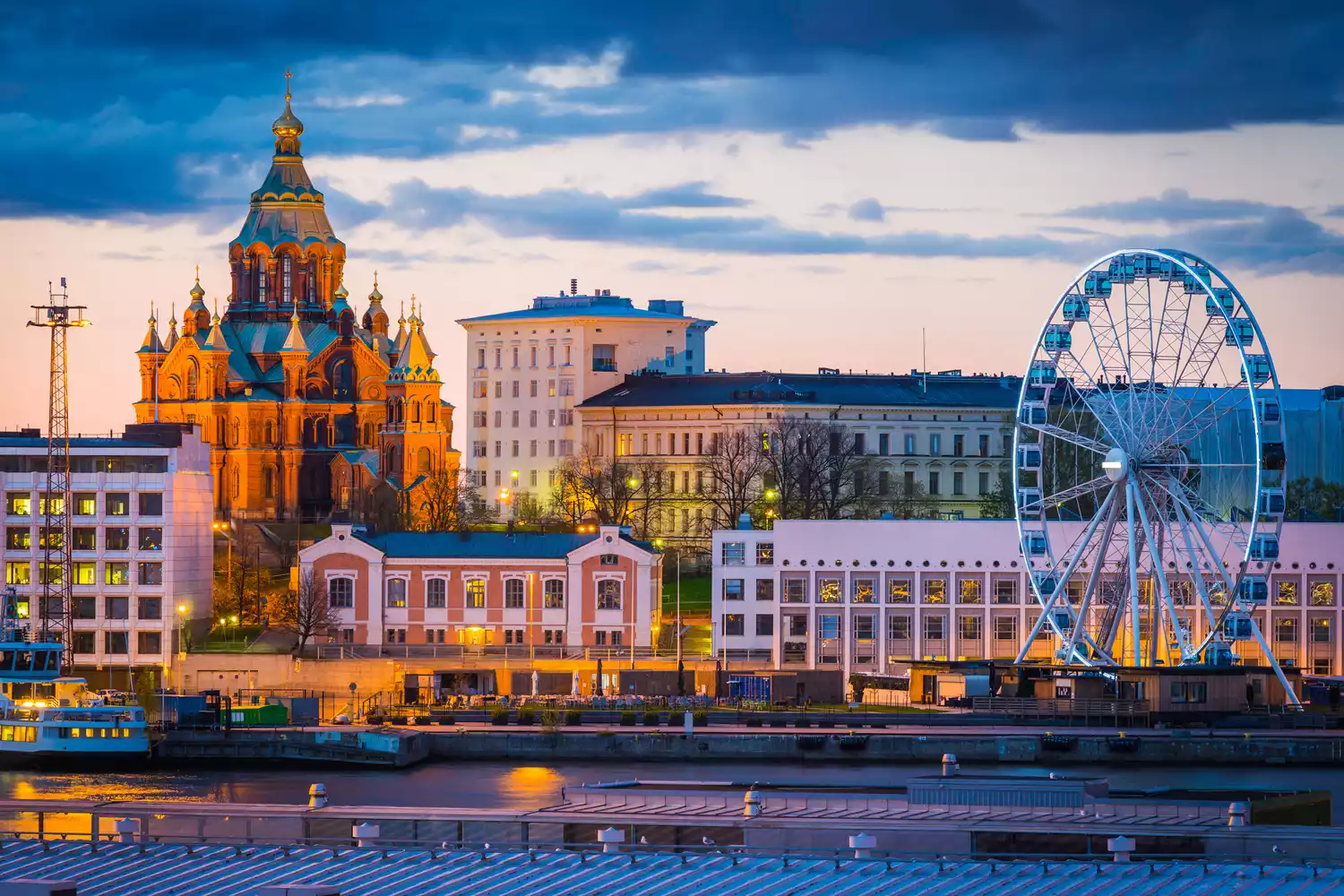
Fast Fact: Helsinki
- Best for: Architecture enthusiasts and urban explorers.
- Best Month to Visit: June (for the White Nights).
- 2026 Insider Tip: The renovated South Harbour district will host "Seaside Saunas," a temporary art installation throughout the summer.
2. Rovaniemi: The Official Home of Santa Claus
Stepping across the Arctic Circle line in Rovaniemi is a rite of passage. As the capital of Finnish Lapland, Rovaniemi is the definitive destination for winter magic. The Santa Claus Village offers year-round festive cheer, but the true draw in 2026 is the region's commitment to "Quiet Luxury." Beyond the reindeer sleigh rides and the official post office, Rovaniemi serves as the gateway to the aurora borealis.
What makes Lapland a must-visit in 2026? It is the intersection of childhood wonder and deep indigenous culture. Visitors can engage with local herders to learn about the significance of reindeer in Sámi life, ensuring that tourism dollars support traditional livelihoods.
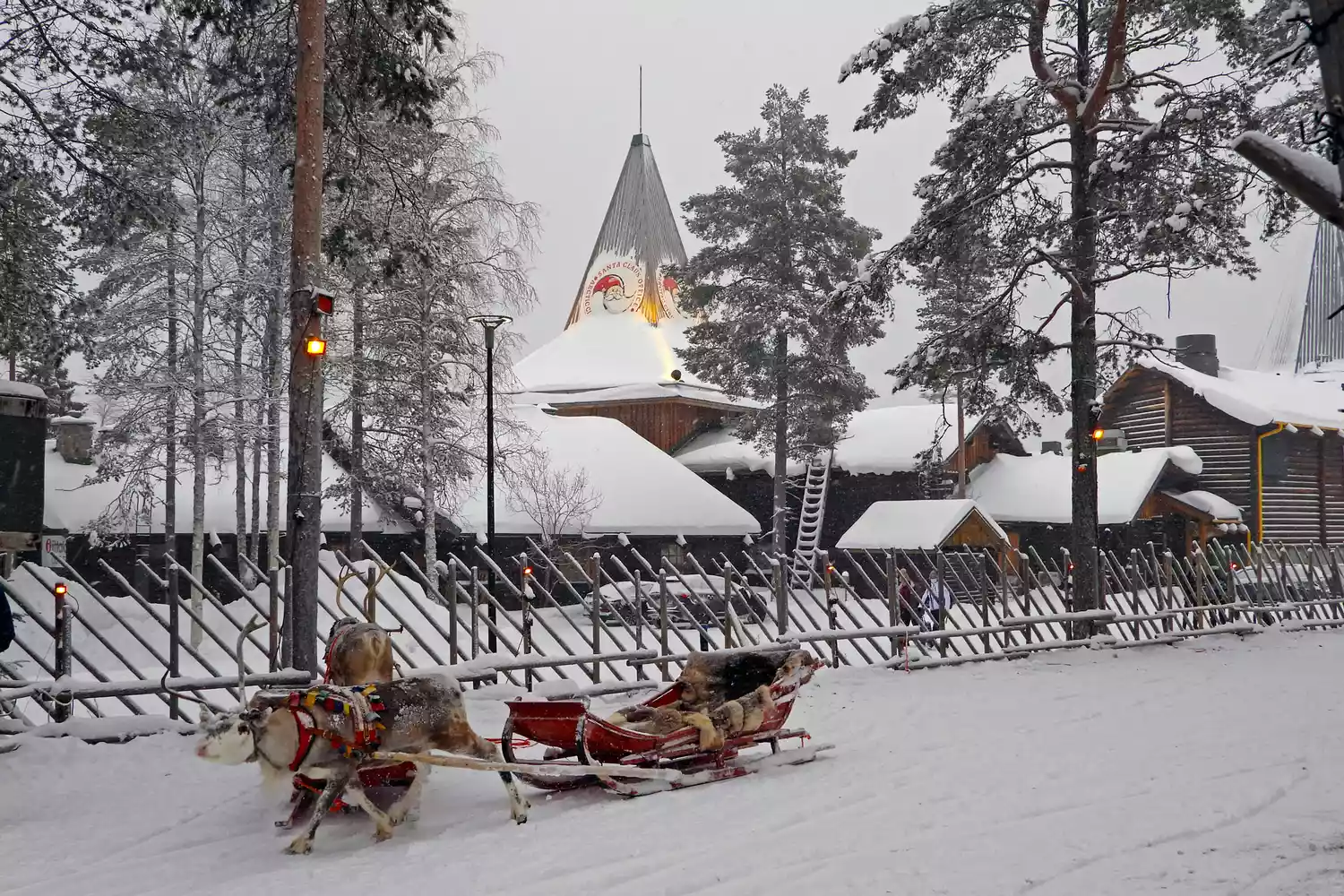
Fast Fact: Rovaniemi
- Best for: Families and Northern Lights hunters.
- Best Month to Visit: December (for atmosphere) or March (for clear aurora skies).
- 2026 Insider Tip: Visit the Arktikum Science Museum early in the morning to beat the tour groups and experience the "Arctic Garden" in solitude.
3. Oulu: European Capital of Culture 2026
If there is one city you cannot miss in 2026, it is Oulu. As the European Capital of Culture, Oulu has curated a program titled "Cultural Climate Change." This isn't just about art; it’s about how creativity can solve environmental challenges. Expect Sámi-inspired exhibitions, massive light installations over the frozen sea, and an expansion of the famous Air Guitar World Championships.
The vibe here is "Northern Creativity"—a mix of high-tech innovation (Oulu is a major tech hub) and a rugged, outdoor lifestyle. The 2026 program specifically highlights electronic music festivals set against the backdrop of the midnight sun, making it a magnet for the modern traveler.
Fast Fact: Oulu
- Best for: Art lovers and festival-goers.
- Best Month to Visit: August (for the peak cultural program).
- 2026 Insider Tip: Check out the "Pikisaari" artists' island, which will feature open-studio nights throughout the year.
4. Turku: The Riverside Cultural Waterfront
Turku, Finland's oldest city and former capital, is undergoing a spectacular renaissance. The Aura River is the city's pulse, lined with historic ships that have been converted into bars and restaurants. The major news for 2026 is the opening of the Music Hall Fuuga. This architectural marvel, located in the heart of the cultural district, features a rooftop terrace with panoramic views of the archipelago.
Historically, Turku is dominated by the 13th-century Turku Castle, a limestone fortress that tells the story of the Swedish-Finnish union. Gastronomy is the other pillar here; with Michelin-starred restaurants like Kaskis and the inventive Smör, Turku is arguably the culinary capital of the country.
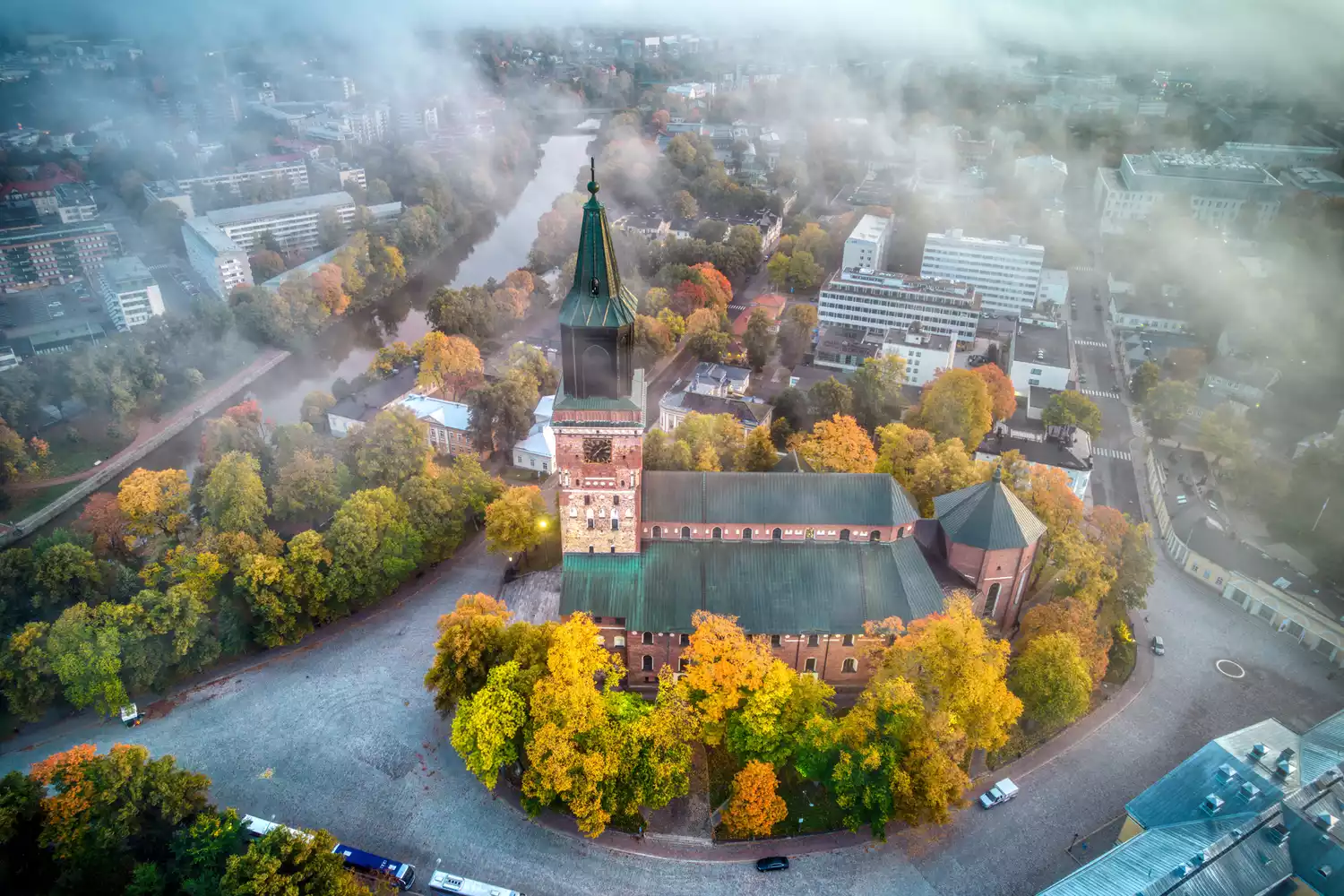
Fast Fact: Turku
- Best for: History buffs and foodies.
- Best Month to Visit: May (for the riverfront spring blossoms).
- 2026 Insider Tip: Book tickets for the Fuuga opening season at least six months in advance.
5. Tampere: The Sauna Capital of the World
Where is the best place to experience Finnish sauna culture? The answer is unequivocally Tampere. Holding the title of the "Sauna Capital of the World," Tampere boasts over 50 public saunas. The most legendary is Rajaportti, the oldest operating public sauna in Finland, dating back to 1906. Here, the heat (löyly) is soft, and the social atmosphere is thick with tradition.
In 2026, Tampere will also celebrate its status as the European Capital of Smart Tourism, showcasing how a city can integrate nature-based tourism with digital efficiency.
Fast Fact: Tampere
- Best for: Wellness seekers and social travelers.
- Best Month to Visit: October (to appreciate the warmth of the sauna against the autumn chill).
- 2026 Insider Tip: Visit the rooftop sauna at Kuuma for a modern contrast to the historic Rajaportti.
6. Levi: Arctic Luxury and Winter Sports
Levi is Finland’s premier ski resort, but it’s the expansion into ultra-luxury that is turning heads in 2026. The new Skýra retreats offer a level of seclusion previously unseen, featuring glass-walled villas that hover over the fellside. Levi’s "Sunrise Safari" on electric snowmobiles is a standout example of Finland's sustainable tourism push, allowing visitors to traverse the silent forests without the noise or emissions of traditional engines.
7. The Åland Islands: An Island-Hopping Paradise
Situated in the Baltic Sea between Finland and Sweden, the Åland Islands are an autonomous, Swedish-speaking archipelago consisting of approximately 6,700 islands. This is a land of maritime history and windswept beauty. 2026 will see an increase in "Slow Travel" routes, encouraging visitors to traverse the islands by bicycle or electric ferry. The island of Kökar, with its Franciscan monastery ruins and dramatic rock formations, remains the archipelago’s best-kept secret.
8. Finnish Lakeland (Saimaa Region)
The Saimaa region is the largest lake district in Europe, a labyrinth of blue and green. It is the primary habitat of the rare Saimaa ringed seal, one of the most endangered seals in the world. 2026 tours are increasingly focused on "Low Impact" wildlife spotting, utilizing silent electric boats.
Traveler’s Note: Don’t miss the town of Varkaus. Its "Museum of Mechanical Music" is a delightfully eccentric collection that highlights the quirky side of Finnish culture.
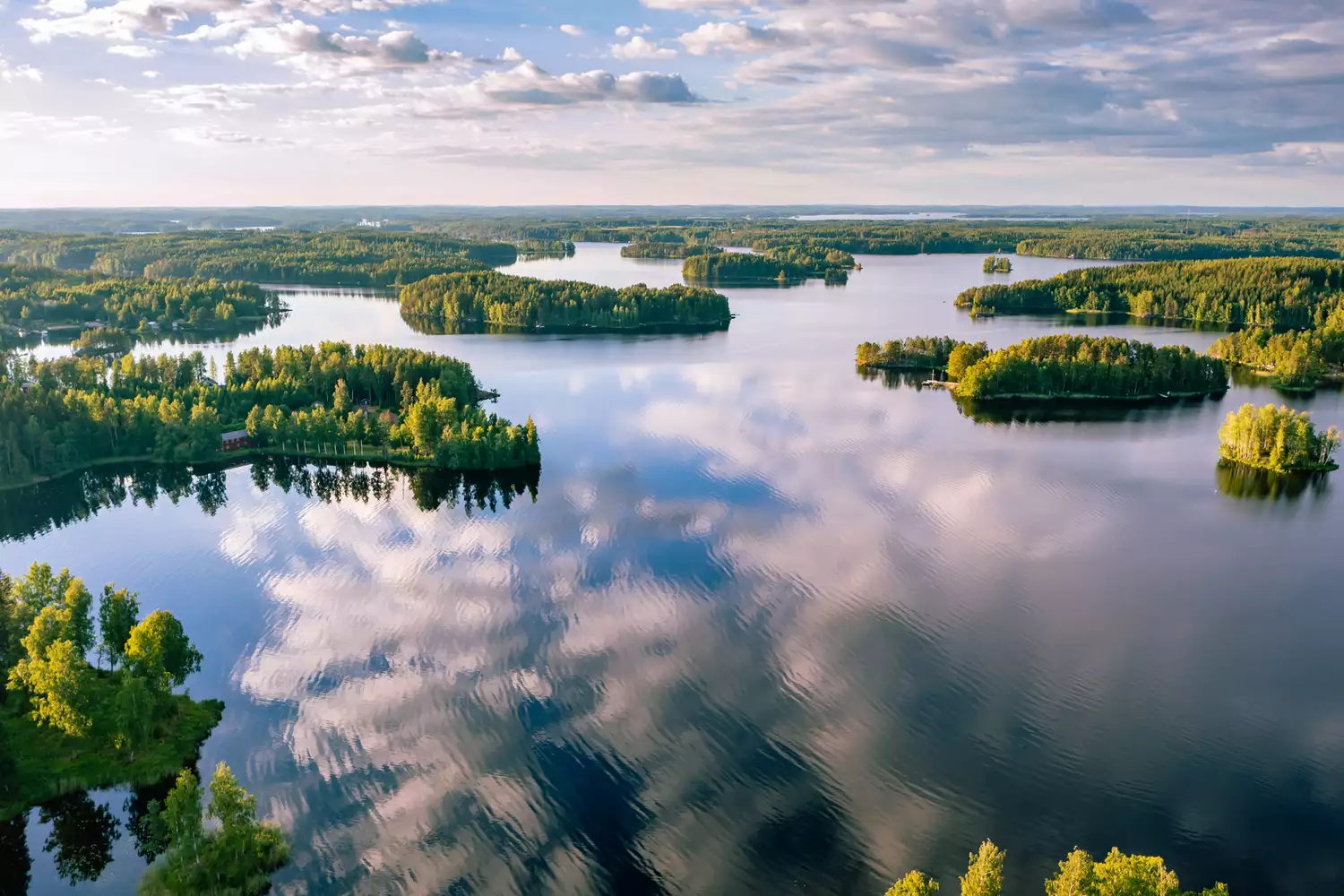
Fast Fact: Lakeland
- Best for: Nature photography and tranquility.
- Best Month to Visit: July (for swimming and boating).
- 2026 Insider Tip: Rent a private cottage with its own wood-fired sauna for the authentic "Mökki" (cabin) experience.
9. Porvoo: Red Houses and Cobbled Streets
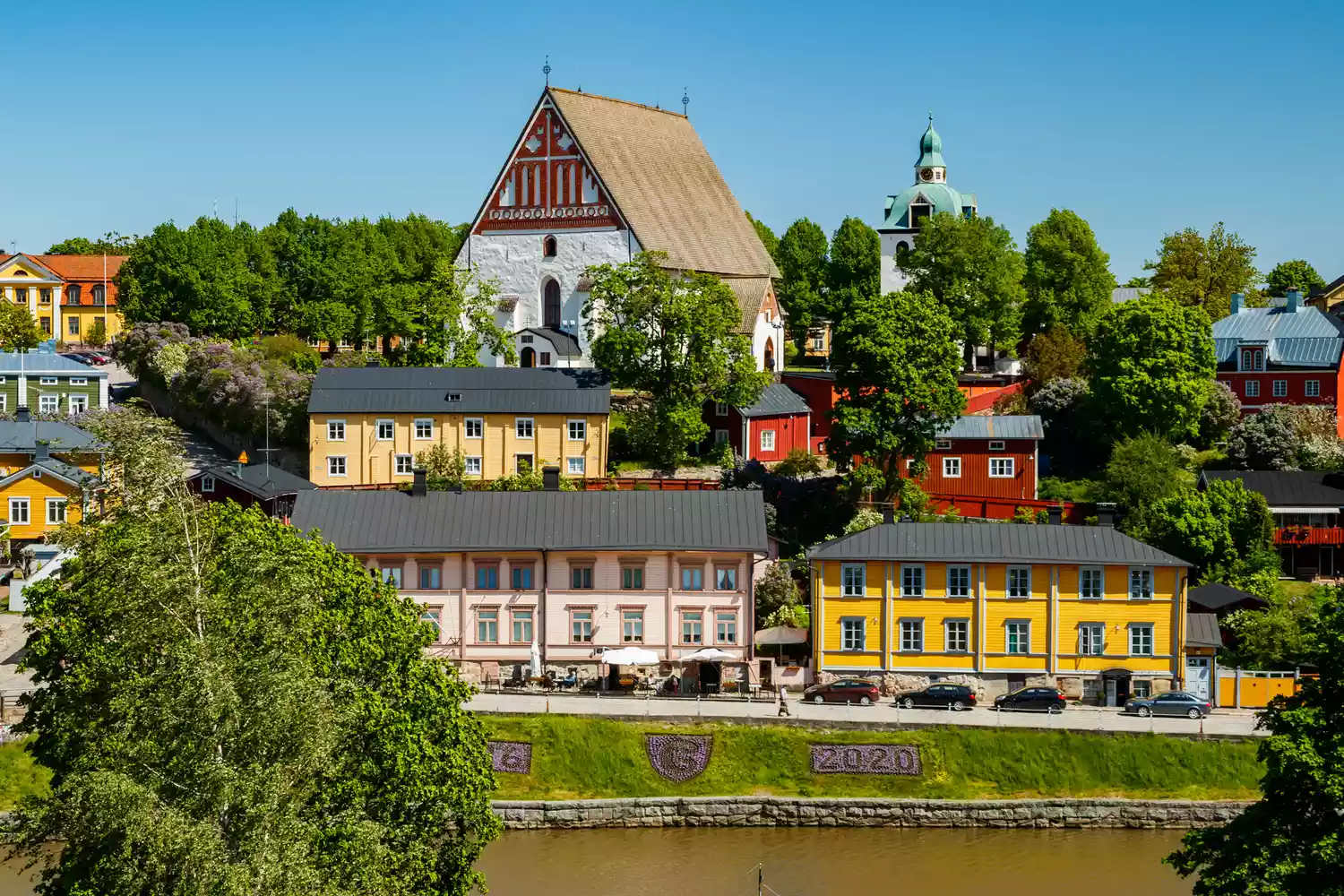
Just an hour east of Helsinki, Porvoo is Finland’s second-oldest city. Its iconic red ochre riverside warehouses were once used to store spices and silks from distant lands. Today, they house artisan boutiques and world-class cafes. The cobbled streets of Old Porvoo are a sensory delight—the smell of freshly baked cinnamon buns (korvapuusti) and the sight of pastel-colored wooden houses.
10. Arctic Luxury Retreats: The New Elite Tier
For the high-end traveler, Finland has redefined what it means to be "off the grid." The 2026 season sees the debut of several exclusive properties that prioritize architectural harmony and private wilderness access.
| Hotel | Location | Key Feature | Vibe |
|---|---|---|---|
| Octola II | Private Forest, Lapland | Ultra-private wilderness lodge | Total Seclusion |
| Arcora Boutique | Muonio | Panoramic glass spa | Modern Nordic Design |
| Gáldu Hotel & Spa | Saariselkä | Northernmost treetop spa | High-Altitude Wellness |
11. Suomenlinna: The Sea Fortress
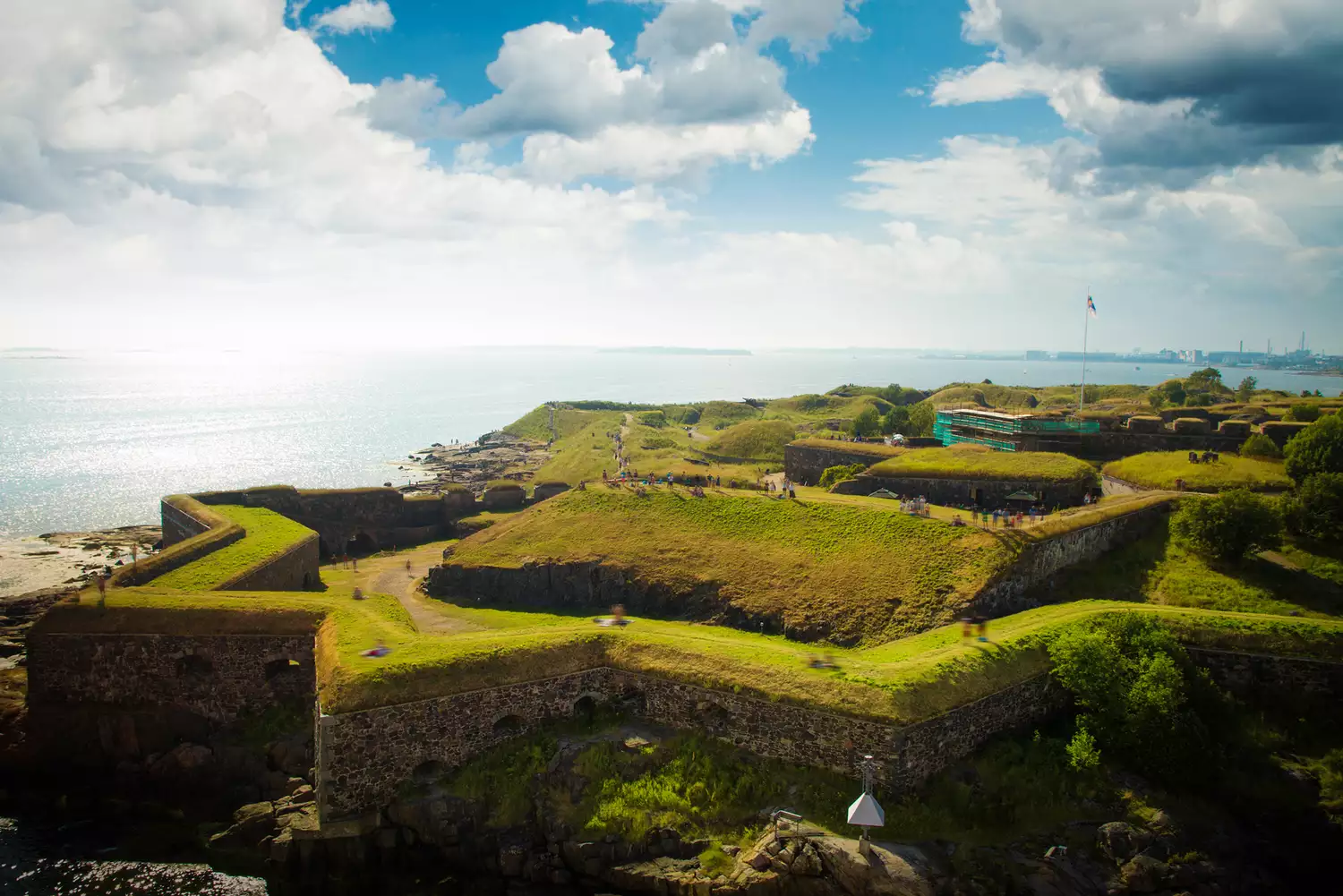
Accessible by a short ferry ride from Helsinki's Market Square, Suomenlinna is a UNESCO World Heritage site and a sprawling 18th-century sea fortress. While it is a tourist magnet, it remains a living community where locals live and work. In 2026, the fortress will debut enhanced digital guides that use augmented reality to recreate 18th-century naval battles along its ramparts.
12. Nuuksio National Park: Wilderness Near the Capital
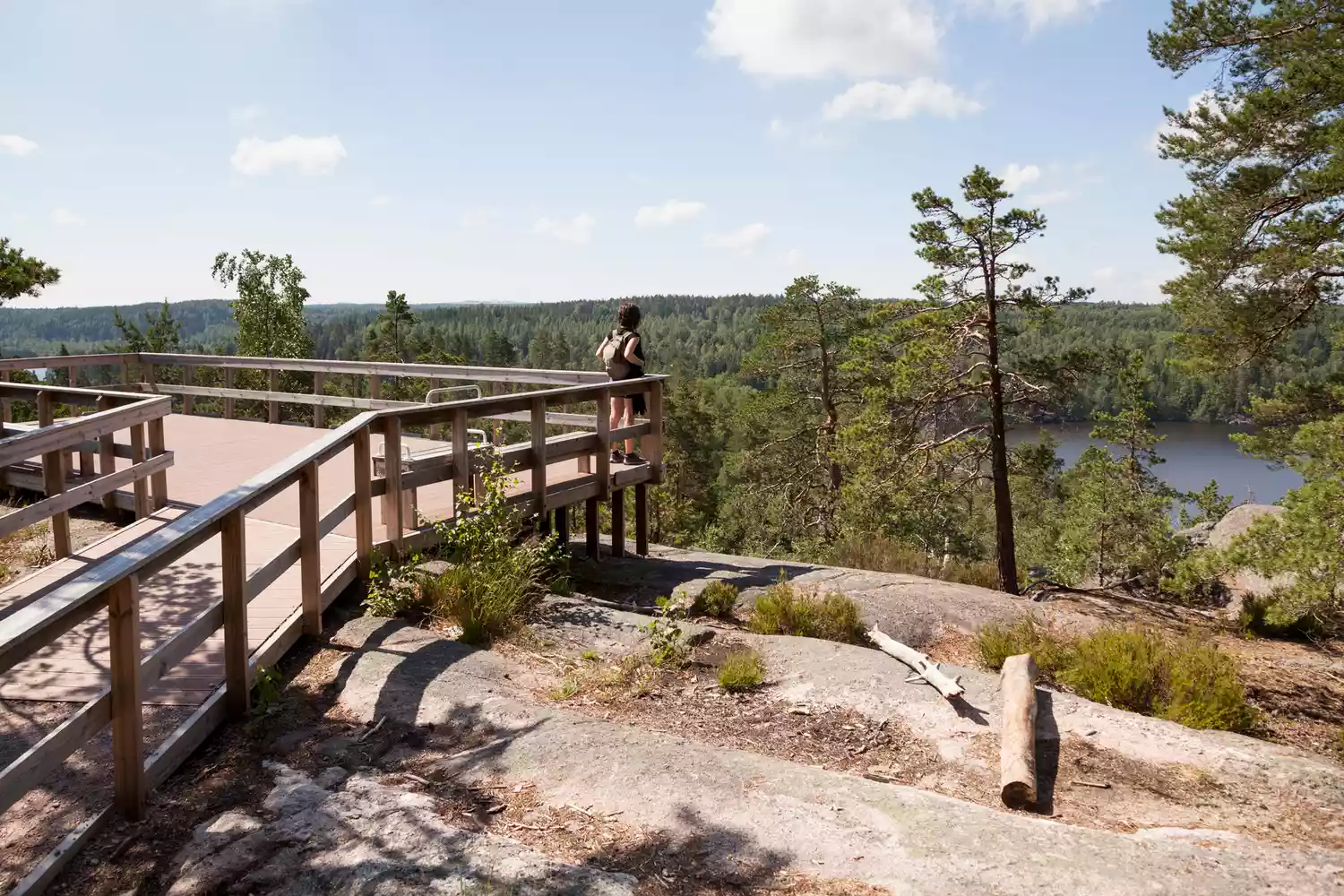
Nuuksio proves that you don't have to travel to Lapland to find the wild heart of Finland. Within 45 minutes of Helsinki, you can find yourself surrounded by craggy cliffs, deep forests, and peat bogs. The park is a testament to Finland's accessibility—it is perfectly possible to have a business meeting in the city in the morning and be picking wild bilberries by the afternoon.
13. Fiskars Village: Birthplace of Creativity
Fiskars Village is where the world-famous orange-handled scissors were born in 1649. Today, the village has been reclaimed by a collective of designers, blacksmiths, and glassblowers. It is a masterclass in industrial heritage preservation. Walking through the village, you can watch artisans at work and purchase high-quality Nordic design directly from the source.
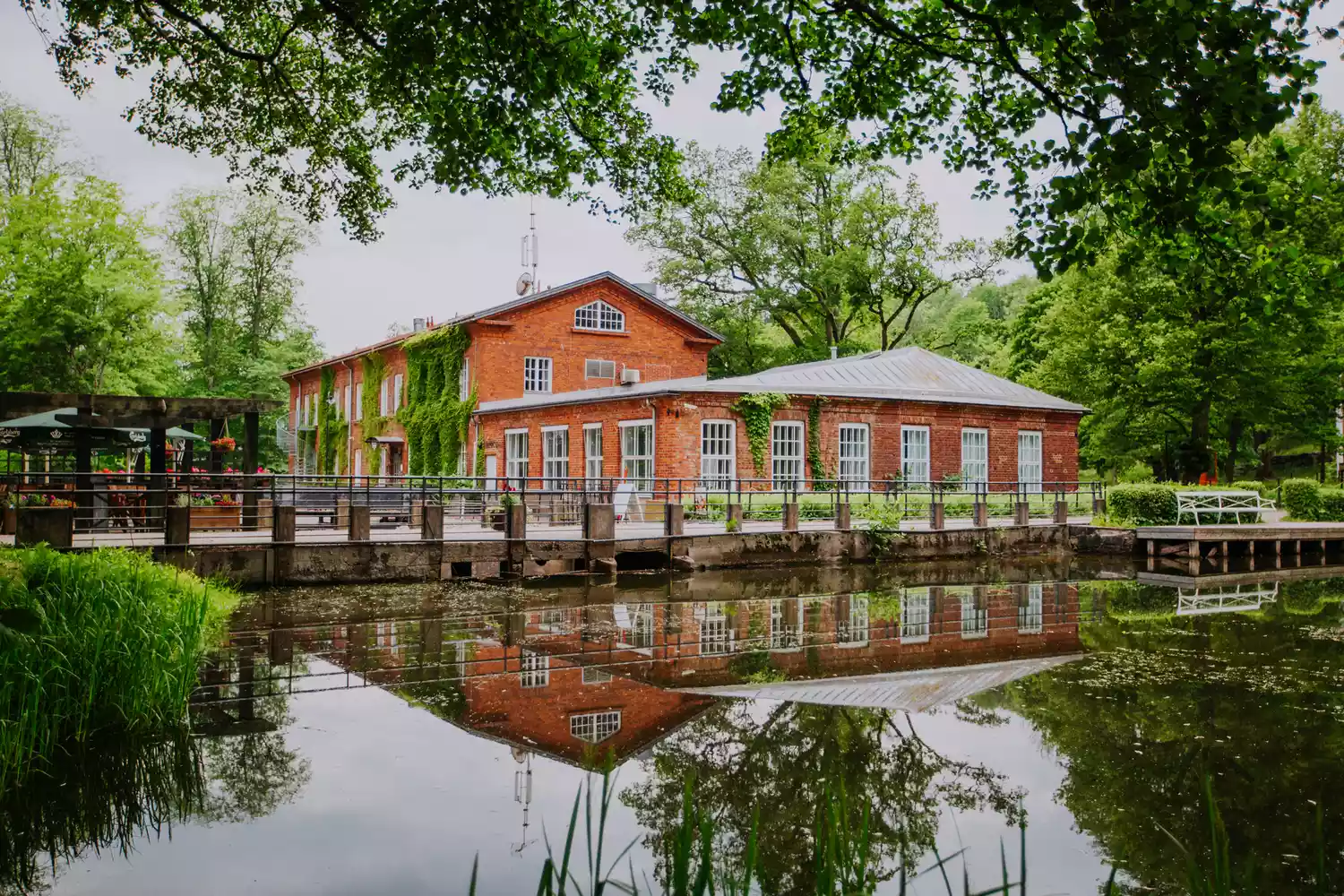
Fast Fact: Fiskars
- Best for: Design lovers and craft enthusiasts.
- Best Month to Visit: September (for the autumn design markets).
- 2026 Insider Tip: Stay at the Hotel Degerby nearby to enjoy the village after the day-trippers have left.
14. Lemmenjoki National Park: Indigenous Heritage
As Finland’s largest national park, Lemmenjoki is the soul of Sámi culture. This is not a place for a casual stroll; it is a place for river boat trips deep into the heart of the "Gold Country." Visitors can meet Sámi families who have lived on this land for generations, learning about their language, dress (Gákti), and the vital role of gold prospecting in the region’s history.
15. Kvarken Archipelago: Geological Wonders
The Kvarken Archipelago, a UNESCO World Heritage site shared with Sweden, celebrates its 20th anniversary of UNESCO status in 2026. The geological significance here is the land uplift—the land is rising from the sea at a rate of 8mm per year due to post-glacial rebound. It is a rare place where you can literally see the world growing.
Travel Planning: Practical Guide for 2026
Traveling through Finland in 2026 is an exercise in efficiency. The Santa Claus Express remains the most romantic and practical way to reach the north—this overnight train connects Helsinki to Rovaniemi and Kemijärvi, offering cozy private sleeper cabins.
- Best Time to Visit: February is often called the 'Goldilocks' month. You get the deep snow and winter activities of December, but with significantly more daylight hours and a higher chance of clear skies for Northern Lights viewing.
- Sustainability: Look for the "Sustainable Travel Finland" (STF) label. This certification ensures that operators meet rigorous environmental and social standards.
- Connectivity: Finland has some of the best mobile data coverage in the world; even in the middle of a national park, you’ll likely have 5G.
FAQ
Q: Is Finland expensive to visit in 2026? A: While Finland is generally more expensive than Southern Europe, it offers high value for money in terms of infrastructure and service. Eating out at lunch (the "Lounas" tradition) is a great way to save, as many restaurants offer fixed-price buffets for €12-€15.
Q: Do I need to speak Finnish? A: No. English proficiency in Finland is among the highest in the world outside of native-speaking countries.
Q: Can I see the Northern Lights in Helsinki? A: It is rare due to light pollution and latitude. For a reliable experience, you should travel north of the Arctic Circle to places like Levi or Saariselkä.
Whether you are drawn by the cultural crescendo of Oulu 2026 or the primal call of the Arctic wilderness, Finland offers a rare commodity in the modern world: the chance to disconnect from the noise and reconnect with the self. In the "Sauna Capital" or a remote glass igloo, you will find that Finnish happiness isn't just a statistic—it’s a tangible, quiet energy that stays with you long after you’ve returned home.