Efficient overhead bin storage is the secret to a stress-free flight. By following the wheels-first rule, you align with airline cabin design and help ensure an on-time departure. This guide explains why wheels-first is the industry standard for carry-on luggage placement and how to maximize overhead bin space using pro flight attendant luggage tips. Whether you are a frequent flyer or a seasonal traveler, understanding the mechanics of the cabin helps everyone avoid the frustration of gate-checked bags and crowded aisles.
Quick Facts
- The Rule: Always store roller bags wheels-first and handles-out to align with bin depth.
- Hygiene: Wheels are 58x dirtier than public toilets; handles-out placement protects cabin crew from germs.
- Capacity: Proper orientation increases storage capacity by up to 80% on modern aircraft.
- The 70% Threshold: Gate agents often begin checking bags once bins reach 70% occupancy based on volume predictions.
- 2026 Standard: The universal carry-on limit is now 22 x 14 x 9 inches to ensure compatibility with newer bin designs.
- Efficiency: Correct storage can save approximately 12 seconds per passenger during the deplaning process.
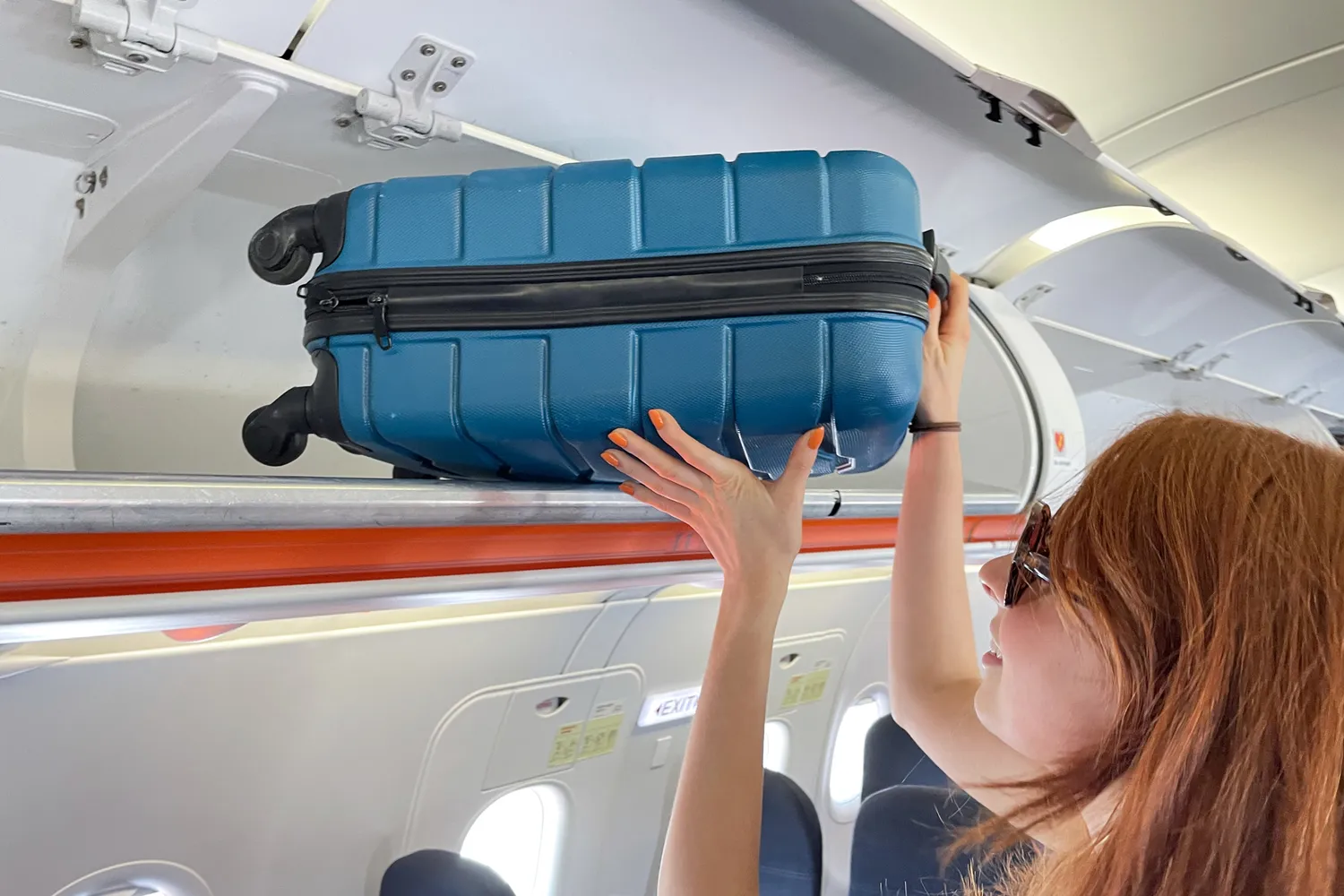
Storing carry-on luggage wheels-first is the standard for efficient overhead bin storage because bins are designed with extra depth at the back to accommodate wheels. This structural fit maximizes overhead bin space, ensures handle accessibility for faster deplaning, and maintains hygiene protocols for cabin crew. By placing bags correctly, you reduce the likelihood of your luggage being gate-checked and contribute to a smoother boarding process for everyone on board.
The Geometry of Storage: Why Wheels Go First
To understand how to put carry on luggage in overhead bin properly, one must first look at the engineering behind the aircraft cabin. Most overhead bins are not perfect rectangles; they are tapered. The rear of the compartment is typically deeper than the front to follow the curve of the airplane fuselage. When you utilize the wheels-first rule, you are pushing the thickest, most irregular part of your suitcase—the wheels and the bottom housing—into that extra deep space at the back.
This orientation ensures a structural fit that allows the bin door to close without force. If you store a bag handle-first, the wheels often protrude just enough to prevent the latch from catching, which leads to flight attendants having to pull your bag out and flip it around. United Airlines reported that installing larger overhead bins on its regional fleet increases storage capacity by 80%, allowing for up to 29 additional carry-on bags per flight when stored wheels-first on their sides.
Beyond the depth, the physics of maximizing overhead bin space for carry-on bags relies on vertical vs. horizontal alignment. In traditional bins, bags lay flat. However, in modern "Space Bins" or drop-down bins, the instruction is often to turn the bag on its side—like a book on a shelf. This wheels-first, sideways approach creates a high-density environment that accommodates more passengers. Why put luggage wheels first in overhead bin? Because it is the only way to ensure the heavy frame of the suitcase doesn't block the locking mechanism of the compartment.
Hygiene and Speed: The Human Element of Handles-Out
While the geometric fit is about the machine, the handle-out orientation is about the people. Flight attendant luggage tips almost always emphasize keeping the built-in straps and handles facing toward the aisle. There are two primary reasons for this: deplaning speed and hygiene protocols.
When a plane lands, the rush to exit creates a bottleneck. If every passenger has to reach deep into a bin to find a grip on a bag, the aisle stays congested for much longer. Accessible handles allow passengers to retrieve bags quickly, preventing bottlenecks in the aisle during arrival. Research into boarding process optimization suggests that having handles facing out can shave significant time off the arrival sequence, which is critical for airlines maintaining tight turn-around schedules.
Furthermore, cabin crew members frequently have to perform Tetris-style loading to fit extra items into a crowded bin. If your wheels are facing out, the crew must grab them to move your bag. Recent environmental studies have shown that suitcase wheels are 58x dirtier than public toilet seats because they travel through city streets, airport restrooms, and grimy sidewalks. Handles-out placement ensures they can move bags safely without coming into direct contact with wheels. This small act of airplane etiquette for overhead bin usage goes a long way in maintaining a healthy environment for the staff who spend their entire day in the cabin.
Beyond Wheels: The Hot Dog Style and Personal Item Etiquette
As airlines upgrade their fleets, you may encounter different types of overhead bin storage. The newest "drop-down" bins, found on many Boeing 737 and Airbus A320 aircraft, are designed for hot dog style storage. This means the bag is placed on its side, wheels-first, rather than laying flat on its back. This technique is the most effective way of maximizing overhead bin space because it allows six bags to fit in a space that previously only held three or four.
However, the system only works if passengers respect the unspoken rules of the cabin. A major cause of aisle congestion is the "bin hog"—someone who places their large roller bag, their backpack, and their heavy winter coat all in the overhead compartment. Industry standards and flight attendant tips for overhead bin storage are clear: reserve overhead space for large carry-ons only. Smaller personal items like purses, laptop bags, and coats should be stored under the seat in front of you.
Many airlines, including Delta and American Airlines, officially instruct passengers to store carry-on bags wheels-first to maximize bin space. To further improve efficiency, some carriers use the Wilma boarding method—Window, Middle, Aisle. By boarding window seat passengers first, airlines reduce the number of times people have to stand up and move, allowing the overhead bins to be filled from the inside out without creating a line in the jet bridge.
The 70% Rule: How to Avoid the Dreaded Gate-Check
One of the most common complaints in travel news is the forced gate-check. You might look at the bins and see plenty of room, yet the agent insists on tagging your bag. This is often due to the 70% rule. Once a flight reaches a certain passenger load—usually around 70% of the overhead bin storage capacity—gate agents proactively begin checking bags. They do this because the cost of a delayed departure is roughly $1,000 per minute for the airline.
To maintain an on-time departure, agents cannot risk the boarding process grinding to a halt because the last ten passengers can't find a spot for their suitcases. United Airlines estimates that its initiative to expand overhead bin space and optimize storage will eliminate the need for gate-checking bags for approximately one million passengers annually.
If you want to know how to avoid gate checking carry on luggage, follow these three steps:
- Board Early: Use your airline status or a credit card to get into an earlier boarding group.
- Use Soft-Sided Bags: These are easier to squeeze into tight spaces, making them less likely to be flagged by an agent.
- Be Prepared: Have your essentials in a smaller personal item so if you are forced to check your roller bag, you aren't scrambling at the door of the plane.
2026 Compliance: AI Scanning and New Dimensions
As we move toward a more standardized travel environment, the technology used for airplane boarding efficiency and luggage storage is evolving. By 2026, many major international carriers are expected to strictly enforce the universal carry-on limit of 22 x 14 x 9 inches. To do this, airlines are moving away from the metal sizer boxes and toward AI-driven computer vision.
Companies like Delta and American are testing gate scanners that use cameras to measure roller suitcase dimensions in real-time as you walk through the terminal. These boarding load alerts notify the crew exactly how many bags are coming, allowing them to make better decisions about when to close the bins.
Furthermore, smart luggage rules are becoming more rigid. If your bag has a built-in battery for charging devices, it must be removable. If the bag is gate-checked and the battery cannot be removed, the bag will likely be denied transport due to fire safety regulations. Staying ahead of these policy updates ensures your carry-on luggage placement remains compliant and your journey remains uninterrupted.
| Feature | Old Standard | 2026 Standard |
|---|---|---|
| Measurement Method | Manual metal sizer box | AI computer vision scanners |
| Size Limit | Varied by airline | 22 x 14 x 9 inches (Universal) |
| Storage Style | Flat / Handle-first common | Sideways / Wheels-first mandatory |
| Smart Luggage | Allowed with battery | Removable battery required |
FAQ
What is the overhead bin storage on a plane?
Overhead bin storage refers to the compartments located above the passenger seats in the cabin of an aircraft. These bins are designed to hold larger carry-on items, such as roller suitcases and duffel bags, that do not fit under the seat in front of the passenger. The design and capacity of these bins vary by aircraft type, with newer planes featuring larger, drop-down style bins.
What are the rules for overhead bins?
The primary rules for overhead bins include storing large items wheels-first or sideways as directed, reserving the space for carry-on luggage rather than small personal items, and ensuring the bin can close without force. Additionally, passengers are usually limited to one bin item and one under-seat item. Safety regulations also require all bins to be securely latched during taxi, takeoff, and landing.
Will my bag fit in the overhead compartment?
Most standard carry-on bags measuring 22 x 14 x 9 inches or less will fit in the overhead compartment of a narrow-body or wide-body aircraft. However, smaller regional jets often have much tighter constraints, sometimes requiring all roller bags to be gate-checked. To ensure a fit, travelers should choose luggage that matches the specific dimensions provided by their airline.
Why can't you wear a crossbody on a plane?
While you can wear a crossbody bag during the flight, flight attendants often ask you to remove it and store it under the seat or in the overhead bin during takeoff and landing. This is a safety protocol to ensure that the strap does not become an entanglement hazard in the event of an emergency evacuation. It also ensures that the passenger's movement is not restricted when they need to exit the seat quickly.
Mastering the wheels-first rule is more than just a tip for frequent flyers; it is a fundamental part of modern aviation efficiency. By aligning your suitcase with the structural fit of the cabin and prioritizing the hygiene and speed of the boarding process, you ensure a better experience for yourself, your fellow passengers, and the cabin crew. Next time you step onto a plane, remember: wheels-in, handles-out, and personal items under the seat.