Quick Facts
- Top Picks for Solitude: Cloud’s Rest and North Dome offer the highest "view-to-crowd" ratio in the park.
- Best Time for Waterfalls: May and June are prime for thundering cascades; Wapama Falls and Chilnualna Falls offer spectacular alternatives to the crowded Mist Trail.
- The High Country Advantage: Trails in Tuolumne Meadows (open July–September) see approximately 60% less foot traffic than Yosemite Valley.
- Half Dome Alternative: Cloud’s Rest is 1,000 feet higher than Half Dome, requires no permit, and provides a direct view down onto the Half Dome cables.
Yosemite Hiking Comparison Table
| Hike | Distance (Round Trip) | Difficulty | Crowd Level | Best For |
|---|---|---|---|---|
| Cloud’s Rest | 14.5 miles | Strenuous | Low-Moderate | 360° Panoramic Views |
| North Dome | 8.8 miles | Moderate | Low | Face-to-face Half Dome views |
| Old Big Oak Flat Road | 4-10 miles | Moderate | Very Low | Historic "Ghost Road" vistas |
| Cathedral Lakes | 7.0 miles | Moderate | Moderate | Alpine scenery & peaks |
| May Lake/Mt. Hoffmann | 6.0 miles | Strenuous | Moderate | Center of the Park views |
| Gaylor Lakes | 2.0 miles | Moderate | Low | Quick high-altitude solitude |
| Chilnualna Falls | 8.2 miles | Strenuous | Low | Spring cascades |
| Wapama Falls | 5.0 miles | Moderate | Moderate | Lakeside waterfall power |
| Carlon Falls | 3.8 miles | Easy-Moderate | Low | Secret swimming holes |
| Merced Grove | 3.0 miles | Moderate | Very Low | Quiet Sequoia giants |
| Tuolumne Grove | 2.5 miles | Moderate | Moderate | Walk-through trees |
| Mist Trail | 5.4 miles | Strenuous | Very High | Iconic waterfall spray |
| Taft Point | 2.2 miles | Easy | High | Vertigo-inducing cliffs |
| Half Dome | 14-16 miles | Extreme | High | Bucket list challenge |
The Secret to Seeing Yosemite
Yosemite is a paradox. It’s one of the most crowded places on earth, yet it is also one of the loneliest. Here is the math that most visitors miss: approximately 95% of Yosemite National Park is designated as undeveloped wilderness. Despite this, over 75% of visitor activity remains concentrated within the tiny, 7-square-mile corridor of Yosemite Valley. If you are willing to lace up your boots and hike just three miles away from a paved road, you’ve already out-traveled the vast majority of the four million people who visit annually.
The goal isn't just to see the icons; it’s to see them without a thousand other people in your peripheral vision. To truly experience the "Range of Light," you need to head for the high country or the rim. My top recommendations for escaping the masses while securing world-class vistas are Cloud’s Rest and North Dome. These trails don't just offer views; they offer perspectives—the kind where the only sound is the wind whistling over granite and your own heartbeat. With over 800 miles of maintained trails, the solitude you’re looking for is waiting; you just have to know which fork in the road to take.
Essential Planning: When to Go and What to Know
Timing in the Sierra Nevada is everything. If you show up in August expecting thundering waterfalls, you’ll find little more than a "leaky faucet" at Yosemite Falls. For the peak waterfall experience, May and June are the golden months. This is when the snowpack melts and the granite walls literally weep with water. However, the high country—specifically Tioga Road and Tuolumne Meadows—is often still under ten feet of snow during this time.
The high-country window is narrow but glorious, typically running from July through September. This is when the sub-alpine meadows explode with wildflowers and the 10,000-foot peaks become accessible. To maximize your solitude, I swear by the "7 AM Rule." If you aren't at the trailhead by 7:00 AM, you aren't hiking; you're commuting. Arriving early doesn't just guarantee a parking spot; it gives you two to three hours of "first light" magic before the tour buses begin to empty.
The Solitude Seekers’ ‘Big Three’: Iconic Views, No Crowds
1. Cloud’s Rest: The Superior Half Dome Alternative
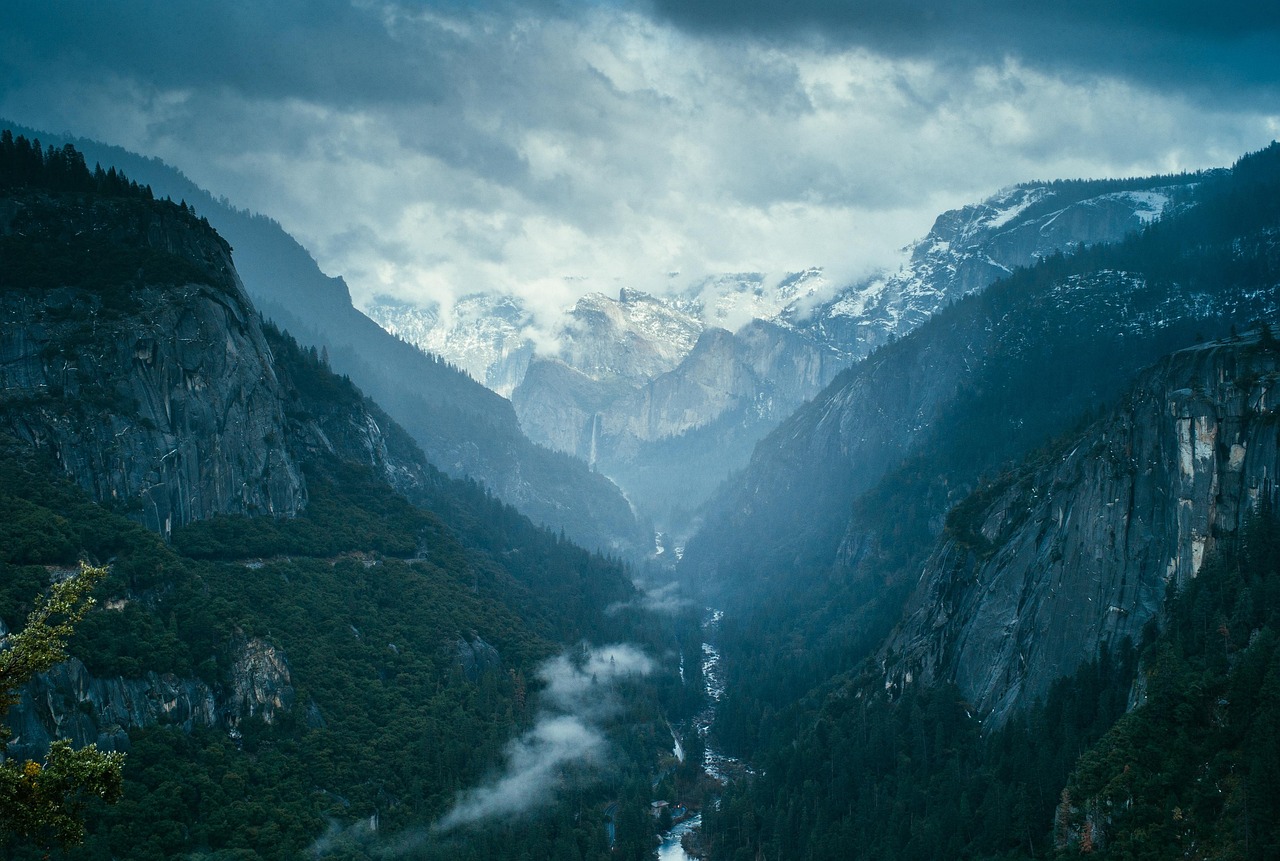
If you want the best view in the park, stop obsessing over the Half Dome permit lottery. At 9,926 feet, Cloud’s Rest sits more than 1,000 feet higher than its more famous neighbor. The view from the summit is a staggering 360-degree panorama that includes the Valley, the Cathedral Range, and a literal bird’s-eye view down onto the top of Half Dome. The final quarter-mile involves a "knife-edge" granite ridge that will get your adrenaline pumping, but the lack of crowds and the absence of permit requirements make this the ultimate Yosemite power move.
2. North Dome: The Face-to-Face Encounter
While everyone else is staring up at Half Dome from the Valley floor, you should be staring at it from North Dome. This trail takes you to the very edge of the northern rim, putting you face-to-face with the massive sheer granite wall of Half Dome. It feels like you could reach out and touch it. Along the way, you’ll also pass Indian Arch, the only natural granite arch in the park. It’s a moderate hike with a massive payoff that stays remarkably quiet even in mid-summer.
3. Old Big Oak Flat Road
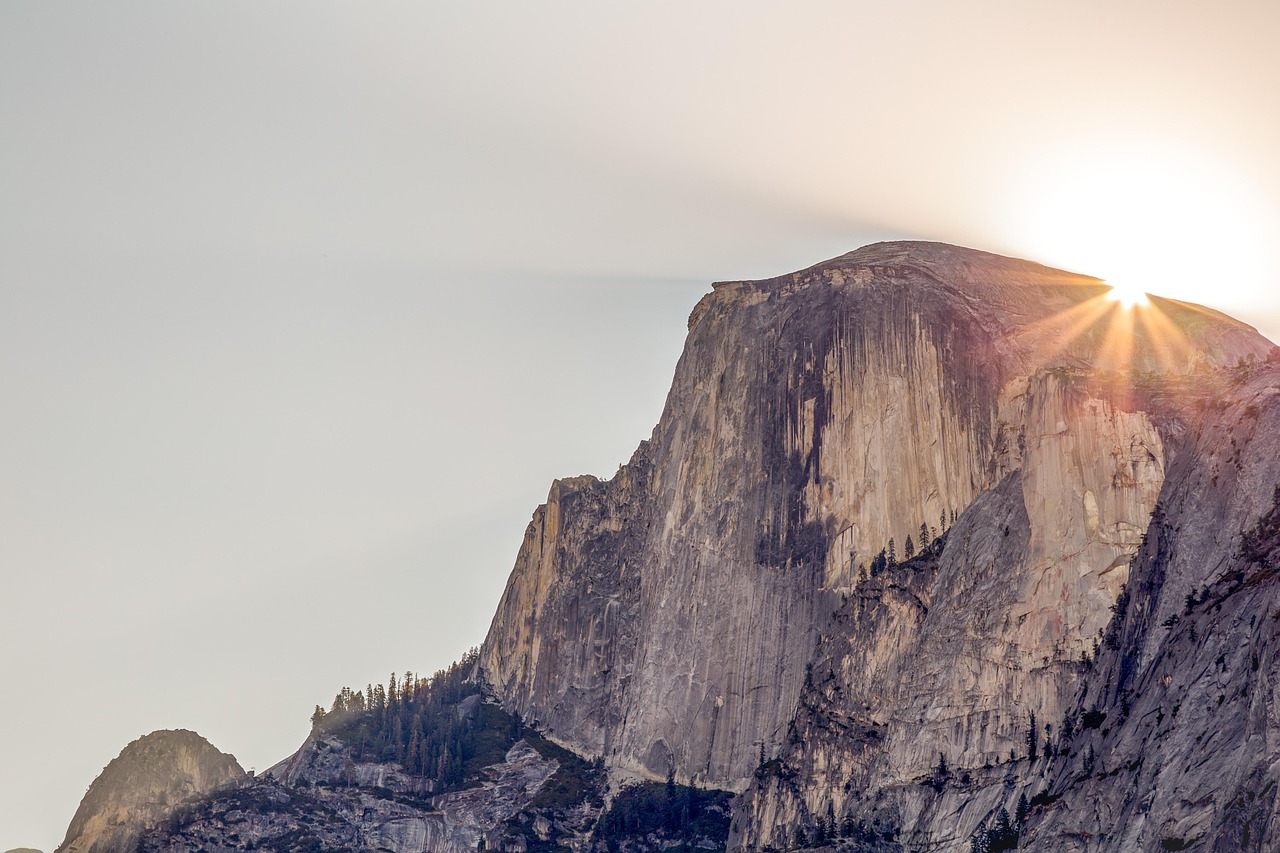
This is the "Ghost Road" of Yosemite. Originally the main stagecoach route into the Valley, it was partially reclaimed by a rockfall and abandoned. Today, it’s a hidden gem for hikers. Because it’s not on the "standard" list of trails, you’ll likely have the unobstructed, iconic views of Bridalveil Fall and El Capitan all to yourself. It’s a haunting, beautiful walk through history with views that rival any of the major overlooks.
Pro-Tip: If you're hiking North Dome, take the short detour to Indian Rock. It’s a steep quarter-mile climb, but seeing a natural arch made of Sierra granite is a rare treat that most people skip.
High Country Escapes: 60% Less Traffic
When the Valley heat hits 90 degrees, head to the High Country. The elevation jump alone provides a natural air-conditioning, and the statistics favor the bold: high-country routes experience roughly 60% less foot traffic than Valley floor trails.
4. Cathedral Lakes
This is alpine splendor at its finest. Sitting at 10,000 feet, the Cathedral Lakes (Upper and Lower) are cradled by the jagged, gothic spires of Cathedral Peak. While the Lower Lake is the more popular of the two because of its iconic reflection of the peak, the Upper Lake offers more secluded nooks for a quiet lunch. The trail is a steady, lung-busting climb through lodgepole pine forests, but once you break out into the granite basins, every step feels like a victory.
5. May Lake and Mt. Hoffmann
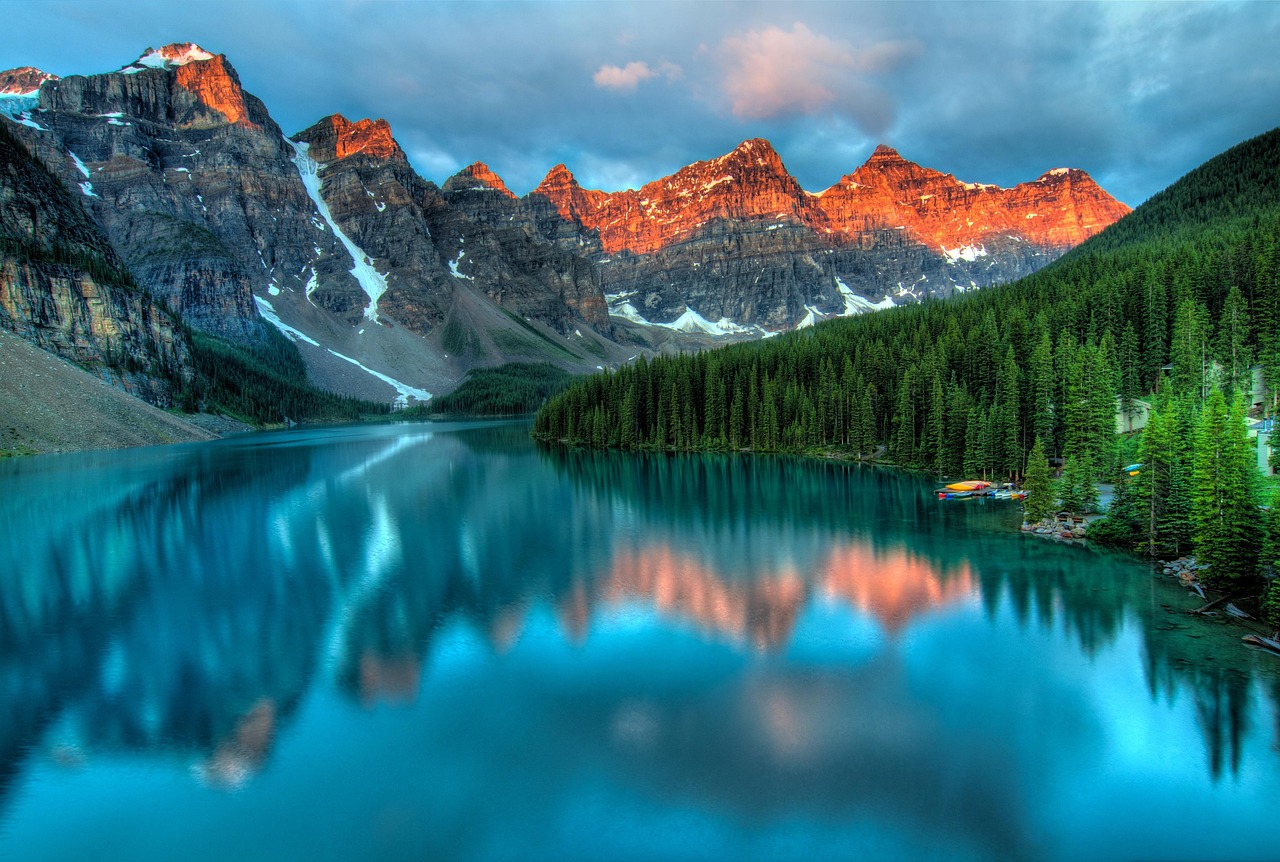
Located at the exact geographic center of Yosemite, Mt. Hoffmann was the favorite view of park pioneer Josiah Whitney. The hike to May Lake is a short, two-mile warm-up to a pristine high-altitude lake. For those with gas left in the tank, the scramble up Mt. Hoffmann offers the "biggest bang for your buck" view in the park. You can see from the Clark Range in the south to the jagged peaks of the north—all without the shuttle-bus crowds.
6. Gaylor Lakes
Starting right at the Tioga Pass entrance (the highest vehicle pass in California), Gaylor Lakes offers immediate high-altitude solitude. The first half-mile is a sharp, steep climb that acts as a "filter"—most casual tourists turn back here. Your reward is a series of shimmering lakes and the ruins of the Great Sierra Mine, all set against a backdrop of red metamorphic rock that contrasts sharply with the park's usual grey granite.
Waterfall Wonders Without the Mist Trail Hordes
The Mist Trail is beautiful, but it can feel like a wet version of Times Square. To find your "Zen" near falling water, you have to move to the park's fringes.
7. Chilnualna Falls (Wawona)
Located in the southern Wawona area, Chilnualna Falls is a series of cascades and horsetails rather than a single drop. It’s a strenuous climb, but the lack of crowds means you can actually hear the water instead of other hikers. In peak spring snowmelt, the power here is terrifying and beautiful.
8. Wapama Falls (Hetch Hetchy)
Hetch Hetchy is often called the "Twin of Yosemite Valley," but it was dammed in the early 20th century to provide water for San Francisco. While the reservoir changed the landscape, the waterfalls here remain world-class. The hike to Wapama Falls takes you across footbridges that are often drenched by the 1,400-foot drop of the cascade. It’s raw, powerful, and significantly less populated than the Valley.
9. Carlon Falls
Just outside the Big Oak Flat entrance lies Carlon Falls. This is a relatively easy, flat hike along the South Fork of the Tuolumne River. It leads to a picturesque waterfall and a deep, clear swimming hole. It’s the perfect "secret" spot for a hot July afternoon when the rest of the park is sweltering.
Quiet Groves: Sequoias Away from the Crowds
The Mariposa Grove is home to the most famous Giant Sequoias, but it also comes with shuttle lines and boardwalks. For a more reverent experience with these ancient giants, look elsewhere.
10. Merced Grove
Merced Grove is home to only about 20 mature trees, but what it lacks in quantity, it makes up for in peace. The trail is a three-mile round trip that descends into a quiet, cathedral-like grove. You’re far more likely to hear the tap-tap of a woodpecker than the chatter of a tour group here. It’s the best place to truly feel the scale and age of these living monuments.
11. Tuolumne Grove
Similar to Merced, Tuolumne Grove offers a downhill hike to a cluster of about two dozen Sequoias. The highlight here is the "Dead Giant," a walk-through tree that allows you to stand inside the hollowed-out trunk of a titan. It’s a great way to experience the Sequoias without the logistical headache of the Mariposa shuttle system.
Strategic Classics: How to Hike the Icons Smartly
Sometimes, you just have to do the famous hikes. I get it. But there’s a right way and a wrong way to do them.
12. The Mist Trail (Vernal & Nevada Falls)
The Mist Trail is legendary for a reason—the spray from Vernal Fall is life-affirming. To avoid the shuffling lines, use my 7 AM Strategy. Better yet, hike up the Mist Trail early and come down the John Muir Trail (JMT). The JMT offers a longer, gentler descent with jaw-dropping views of Nevada Fall that most people miss by going out-and-back.
13. Glacier Point to Taft Point (Pohono Trail section)
Glacier Point is a drive-in view, which means it’s always packed. However, if you step onto the Pohono Trail heading toward Taft Point, the crowds thin out immediately. Walking along the rim offers views that rival those from a small aircraft. Taft Point’s "fissures"—deep cracks in the granite that drop thousands of feet straight down—are not for the faint of heart, but they are essential Yosemite.
14. Half Dome: The Bucket List Challenge
This is the ultimate Yosemite hike. It requires a permit via a lottery system, and it is physically punishing. The final ascent up the "cables"—two steel cables anchored into the granite—is a mental and physical test. To do this safely, you need to be prepared for a 12-hour day and bring the right gear.
Yosemite Hiking Essentials Checklist
Don't let the beauty fool you; the Sierra is a high-altitude desert that can be unforgiving.
- Water Requirements: For big days like Half Dome or Cloud’s Rest, 4 to 6 liters of water is not an exaggeration. The granite reflects heat, and dehydration happens fast at 9,000 feet.
- Footwear: Leave the sneakers in the car. You need trail runners or hiking boots with serious "sticky" rubber (look for Vibram soles) to grip the smooth granite slabs.
- Gear for the Cables: If you’re tackling Half Dome, bring a pair of sticky gardening gloves. They are the "pro secret" for getting a solid grip on the steel cables.
- Trekking Poles: Your knees will thank you on the descent from trails like Snow Creek or the Mist Trail.
Check Current Trail Conditions →
FAQ
Do I need a permit to hike in Yosemite? Day hiking most trails does not require a permit. However, hiking to the summit of Half Dome (when the cables are up) requires a permit through a lottery system. Wilderness permits are also required for any overnight backpacking.
Which is better: Half Dome or Cloud’s Rest? In my opinion, Cloud’s Rest. It’s higher, has a better 360-degree view, requires no permit, and is significantly less crowded. Half Dome is iconic, but Cloud’s Rest is the better overall hiking experience.
What should I do if I see a bear? Yosemite is black bear country. If you see one on the trail, keep your distance (at least 50 yards). If it approaches you, make yourself look large and yell loudly. Always use the provided bear lockers for food storage at trailheads.
Join the Adventure
Yosemite isn't just a destination; it’s a proving ground for the soul. Whether you’re standing on the wind-swept summit of Cloud’s Rest or sitting in silence beneath a 2,000-year-old Sequoia, these trails offer a chance to reconnect with something raw and eternal. Pack your bags, respect the wild, and I'll see you on the rim.
Ready to hit the trail? Share your favorite "hidden" Yosemite spot in the comments below!