Quick Facts
- Status: UNESCO Intangible Cultural Heritage (since 2018)
- Best Visit Time: May (Rose harvest) or August (Jasmine harvest)
- Must-Do: 2-hour perfume-making workshop
- Transport: 1 hour by train from Nice; 30-45 mins from Cannes
- Signature Flower: Rosa centifolia (May Rose)
- Historical Pivot: 16th-century shift from leather tanning to fragrance
- Budget Tip: Free guided tours at Fragonard, Molinard, and Galimard factories
Grasse is the undisputed perfume capital of the world, offering a unique blend of olfactory history and medieval charm located in the Alpes-Maritimes region. Visitors seeking things to do in grasse france will find an immersive landscape of flower fields, historic factories, and artisan workshops that celebrate centuries of aromatic craftsmanship.
To arrive in Grasse is to experience a shift in the very atmosphere of the French Riviera. While the coast glitters with salt spray and sun-drenched azure, Grasse offers something deeper—a heady, botanical embrace that clings to the air. Nestled in the hills of the Provence-Alpes-Côte d'Azur, this medieval town is a place where history is measured in top notes and base notes, and where the lineage of a family is often traced through the sensitivity of their noses.
From Stench to Scent: The History of the World's Perfume Capital
The evolution of grasse france is a fascinating paradox of sensory extremes. During the Middle Ages, the town was not known for its fragrance, but for its stench. It was a thriving center for the leather tanning industry, a process that utilized animal fats and chemicals that left the streets smelling quite pungent. However, during the Renaissance, the fashion for scented leather gloves swept through the French court, popularized by Catherine de Medici.
The local artisans discovered that the hillsides, with their unique microclimate, were perfect for cultivating aromatic plants. By the 18th century, the tanning pits began to vanish, replaced by copper stills and fields of flowers. This remarkable fragrance history led to the region’s current status as a global hub. In November 2018, UNESCO inscribed the perfume-making skills of Grasse on its Representative List of the Intangible Cultural Heritage of Humanity. This recognition honors the region's Savoir-faire in flower cultivation and essence extraction.
Today, the industry is more than just a heritage; it is an economic powerhouse. The perfume and flavor industry in the Pays de Grasse region generates over 1.5 billion euros in annual revenue, which accounts for nearly half of the total production in the sector for all of France. When you walk through the winding cobblestone streets, you are walking through a valley that produces approximately two-thirds of France's natural aromas for both perfumes and food flavorings.
The Big Three vs. Niche Artisans: Choosing Your Grasse Perfume Tour
For the first-time visitor, the "Big Three" perfume houses—Fragonard, Molinard, and Galimard—provide an essential introduction to the world of grasse perfume. Each offers a distinct experience, often including visiting grasse perfume factories for free.
- Fragonard: Located in the heart of the Old Town, the historic factory is a masterclass in elegance. Their museum displays thousands of years of fragrance history, from Egyptian ointment jars to Marie Antoinette’s travel vanity.
- Molinard: Founded in 1849, this house remains family-owned and is housed in a stunning building designed by Gustave Eiffel. It feels more intimate, with amber-hued rooms and a focus on traditional alchemy.
- Galimard: As the oldest of the trio (founded in 1747), Galimard is located slightly outside the town center but offers a highly technical look at the extraction process.
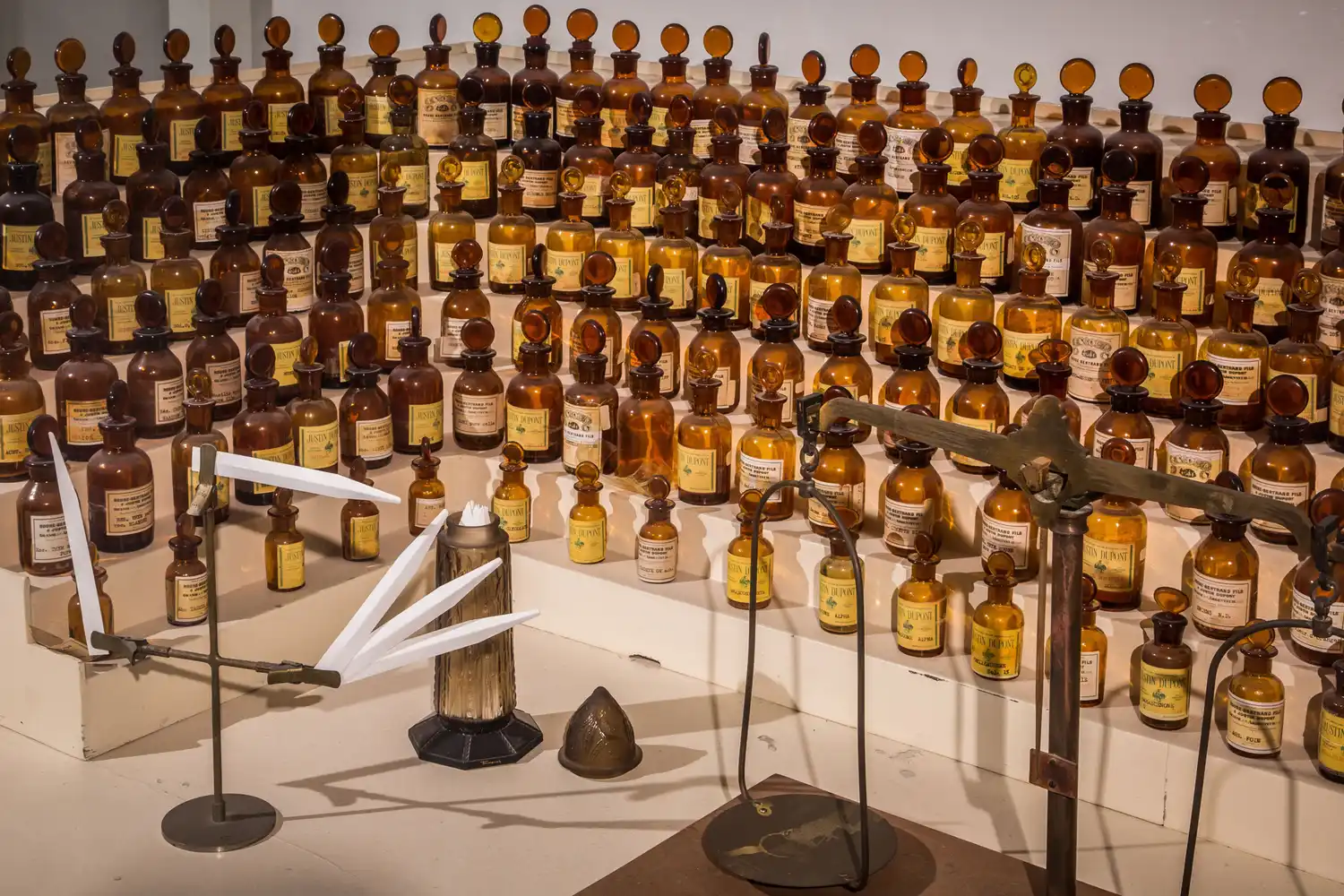
Inside these factories, you will encounter the perfumer's organ—a multi-tiered desk holding hundreds of vials of essences, arranged like a musical instrument. This is the workspace of Le Nez (The Nose), the master creators who possess the olfactory expertise to distinguish between thousands of individual scents. While the big houses are magnificent, don't overlook niche creators like Didier Gaglewski. His boutique in the Old Town offers a more personal, artistic perspective on scent, focusing on the poetry of raw materials.
The Seed-to-Bottle Experience: Flower Fields & Workshops
The soul of Grasse resides in the soil. The region is famous for the Rosa centifolia, or the May Rose, a bloom so delicate and potent that it has become the signature of Chanel No. 5. To truly understand the journey of a fragrance, one must visit the grasse france flower fields.
Participating in a perfume making workshop grasse france is perhaps the most rewarding experience the town offers. For approximately 53 to 70 euros, you can spend two hours under the guidance of a professional, learning to balance top, heart, and base notes. It is a meditative process, stripping away the commercial branding of the beauty industry and returning to the raw, botanical essence of scent.
If you are planning a journey, the timing of your visit is crucial to witness the harvest.
| Season | Flower | Event/Highlight |
|---|---|---|
| May | Rosa centifolia (May Rose) | Expo Rose Festival (Check expo rose grasse 2026 dates for May planning) |
| June - July | Lavender & Tuberose | Fields turn purple and heady white blooms appear |
| August - October | Jasmine | The Jasmine Festival (Fête du Jasmin) in early August |
| January - March | Mimosa | Bright yellow blossoms light up the winter landscape |
Grasse by the Clock: Practical Planning & Logistics
Navigating this hilltop medieval village requires a bit of foresight. Many travelers arrive via the train from nice to grasse france, a scenic journey of about an hour that climbs away from the coast into the foothills of the Alpes-Maritimes.
Upon arrival, the train station sits at the base of the hill. A shuttle bus or a steep, 15-minute uphill walk will lead you to the historic center. Once there, a map of grasse france is helpful, but the best way to explore is to follow the golden plaques set into the pavement, which mark the town’s Heritage Trail.
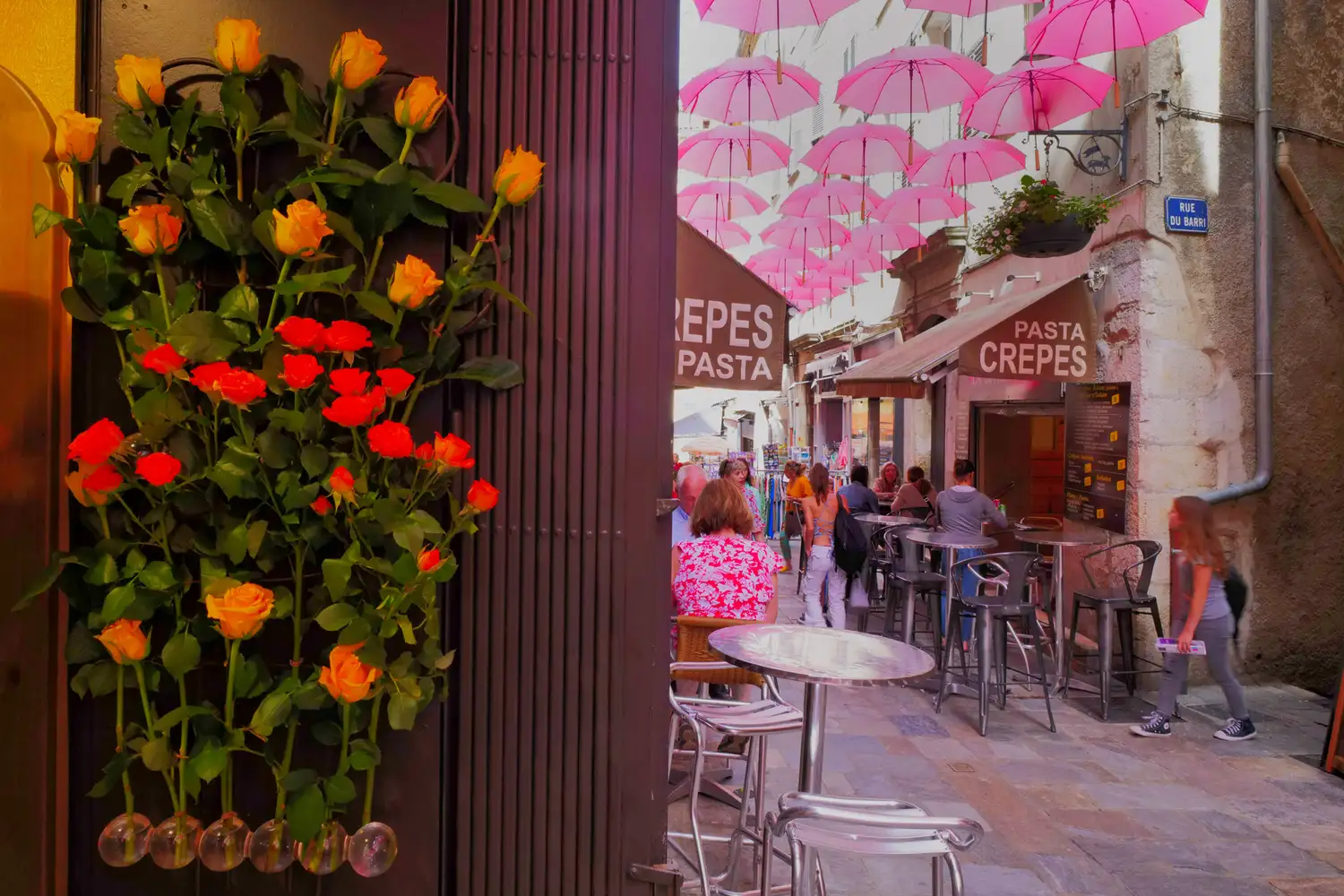
Look up while navigating the narrow alleys; during the summer months, the sky is often obscured by hundreds of vibrant pink umbrellas. These installations provide shade and a whimsical, photogenic atmosphere to the stone-walled streets. Beyond the perfume houses, take an hour to visit the 13th-century Notre-Dame-du-Puy cathedral, which houses three original paintings by Rubens and one by Jean-Honoré Fragonard, the town's most famous artistic son.
Beyond the Scent: Gastronomy & Hidden Alleys
The olfactory expertise of the region naturally spills over into its culinary scene. In Grasse, you don't just smell the flowers; you eat them. One of the local delicacies you must try is Fougassette, a soft brioche flavored with orange blossom water. It is best enjoyed warm from a local bakery like Boulangerie Venturini.
When looking for the best restaurants in grasse old town, seek out those that emphasize seasonal, Provencal ingredients.
- Lou Fassum: Located just outside the center, it offers panoramic views and refined dishes that often incorporate floral notes like lavender or rose.
- Le Biniou: A charming spot for those who want a cozy, traditional French meal in the heart of the medieval streets.
- Cafe des Musées: Perfect for a quick, fresh lunch between museum visits.
The connection between fragrance and flavor is evident in the local markets, where you can find rose petal jam, violet syrups, and honey infused with the wild herbs of the scrubland. It is a sensory loop that begins in the fields and ends on the palate.
FAQ
Is Grasse, France worth visiting?
Absolutely. For anyone interested in history, artisanal crafts, or sensory experiences, Grasse offers a depth that the more commercial coastal cities sometimes lack. It provides a unique look into a UNESCO-recognized heritage that has shaped the global beauty industry for centuries.
How do you pronounce Grasse France?
Grasse is pronounced like the English word "grass," but with a slightly softer, more elegant finish on the 's'. The 'e' at the end is silent.
Why are there pink umbrellas in Grasse?
The pink umbrellas are an art installation and practical shade solution during the hot summer months. They have become a signature symbol of the town, reflecting the color of the famous May Rose and adding a festive, atmospheric charm to the medieval Old Town.
How much time do you need in Grasse?
A single day is sufficient to visit a perfume factory, take a workshop, and wander the Old Town. However, if you wish to visit the flower fields (which are often a 15-20 minute drive from the center) or explore the International Museum of Perfume in depth, two days allow for a much more relaxed pace.